Featured Insight
AI Agent vs. Chatbot: Why Companies Are Now Building Systems That Do Work, Not Just Answer Questions
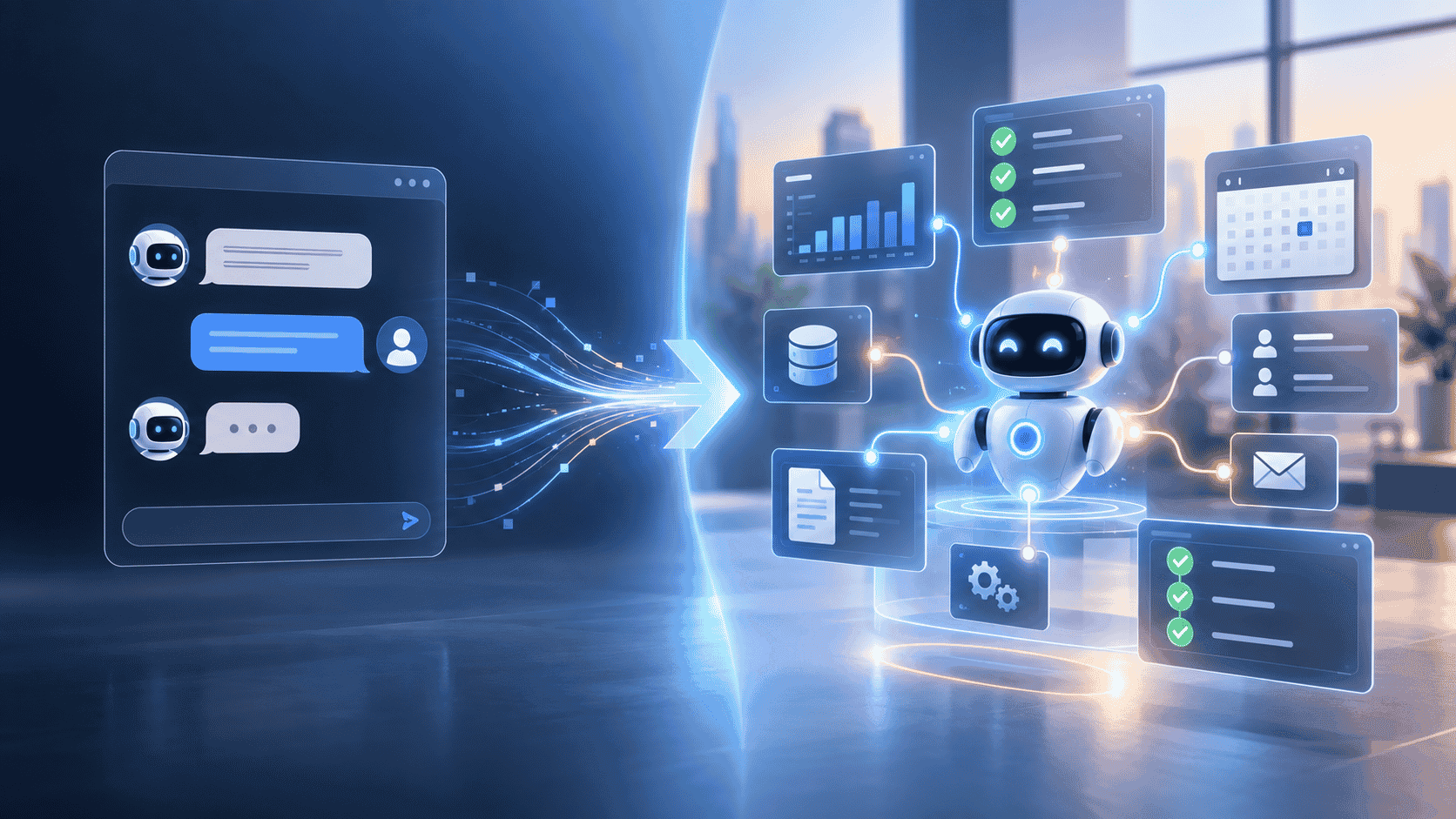
The key transformation in enterprise AI is not simply that models can communicate better, but that they can safely and controllably take action across software systems. The primary output of a traditional chatbot is an answer. The output of an AI agent is completed work: checking an order, creating a return, updating a CRM record, preparing a quotation, reviewing a document, analyzing supplier risk, or initiating a transaction after the required approval.
For this reason, chatbots and AI agents are not the same. **A chatbot is often a user interface; an agent is a decision-making, tool-using, and execution architecture.** By working with APIs, enterprise data, memory, workflows, and permission controls, an agent can complete multi-step tasks and request human approval when necessary.
Real-world examples demonstrate the operational value of this shift. Klarna reported that its AI assistant handled 2.3 million customer conversations in its first month, reduced resolution time from 11 minutes to under 2 minutes, and cut repeat inquiries by 25%. Eczacıbaşı Holding reported reducing some supplier-risk decision cycles from as long as two weeks to under three days and shortening certain mining analyses by more than 90%.
However, agent systems also introduce greater operational risk than chatbots. A wrong answer creates an information-quality problem; a wrong agent action can modify records, trigger financial transactions, or access sensitive data. Identity management, least-privilege permissions, human approval, audit logs, sandboxing, monitoring, and rollback mechanisms therefore become core architectural requirements.
For companies, the right objective is not maximum autonomy but measurable and economically optimal autonomy. Success should no longer be judged by how well an AI can talk, but by what work it can reliably complete, at what cost, with what success rate, under what authority, and within which security boundaries.
Artificial Intelligence